Showing posts with label personnel. Show all posts

Wednesday, March 18, 2009

Difference-makers in the NCAA, NIT tournaments

A big key to winning in the NCAA Tournament is having pro prospects, whether NBA, D-League, or European League.

Here's a list of guys I'd consider "difference makers" at the college college level who are playing in the NCAA tourney. [Ranked by pro potential.]


SOUTH REGION

1. Blake Griffin - Oklahoma, PF
2. James Harden - Arizona State, OG/SF
3. Ty Lawson - UNC, PG
4. Willie Warren - Oklahoma, OG
5. Tyler Hansbrough - UNC, PF
6. Jonny Flynn - Syracuse, PG
7. Austin Daye - Gonzaga, SF
8. Gordon Hayward – Butler, SF
9. Ed Davis - UNC, PF
10. Manny Harris - Michigan, OG
11. Trevor Booker - Clemson, F
12. Marcus Thornton - LSU
13. Jeff Pendergraph - Arizona State, PF
14. Wayne Ellington - UNC, OG
15. Jeremy Pargo - Gonzaga, PG
16. KC Rivers - Clemson, OG
17. Matt Bouldin - Gonzaga, OG
18. Danny Greene - UNC, SG/SF
19. Josh Heytvelt - Gonzaga, PF
20. DeShawn Sims - Michigan, PF
21. Dionte Christmas – Temple, G
22.A.J. Slaughter -Western Kentucky ,OG

Others of note in South Region: Tasmin Mitchell (LSU), Matt Howard (Butler), Mike Tisdale (Illinois), Artsiom Parakhouski (Radford), Matt Kingsley (SFA),Orlando -Mendez-Valdez(Western Kentucky), Chester Frazier (Illinois/injured).

EAST REGION

1. Gerald Henderson - Duke, OG
2. Jrue Holiday - UCLA, OG
3. DeJuan Blair - Pittsburgh, PF
4. Kyle Singler - Duke. SF
5. Darren Collison - UCLA, PG
6. Damion James - Texas, PF
7. Eric Maynor - VCU, PG
8. Sam Young - Pittsburgh, SF
9. AJ Abrams - Texas, PG
10. Tyler Smith - Tennessee, SF
11. LeVance Fields – Pittsburgh, PG
12. Scotty Hopson - Tennessee, OG
13. Derrick Brown - Xavier, PF
14. Toney Douglas - Florida State, OG
15. Jon Scheyer – Duke, G
16. James Anderson -Oklahoma State, SF
17. Larry Sanders -VCU, PF
18. Corey Fisher – Villanova, PG

Other East Region players of note: Scottie Reynolds (Villanova), Dante Cunningham (Villanova), Dexter Pittman (Texas), Lawrence Westbrook (Minnesota),Solomon Alabi( Florida State ), Ralph Sampson (Minnesota), Elliott Williams (Duke), Marcus Landry (Wisconsin), Derrick Mercer (American), Courtney Pigram (ETSU), Jeremiah Dominguez (Portland State), DJ Rivera (Binghampton).

MIDWEST REGION

1. Jeff Teague - Wake Forest, G
2. Jordan Hill - Arizona, PF
3. Earl Clark - Louisville, SF
4. BJ Mullins - Ohio State, C
5. Al-Farouq Aminu - Wake Forest, F
6. DerMar Derozan - USC, SF
7. Evan Turner - Ohio State, F
8. Terrance Williams - Louisville, SF
9. Cole Aldrich - Kansas, C
10. James Johnson - Wake Forest, F
11. Chase Budinger - Arizona, SF/OG
12. Samardo Samuels - Louisville, F
13. Devin Ebanks - West Virginia, F
14.Kalin Lucas (Michigan State), PG
15. Sherron Collins - Kansas, PG
16. Raymar Morgan - Michigan State, F
17. Taj Gibson - USC, PF
18. Tyrese Rice - Boston College, G
19. William Buford - Ohio State, OG
20. Tony Woods - Wake Forest, C/PF
21. Luke Nevill - Utah, C
22. Tyshawn Taylor – Kansas, PG
23. Daniel Hackett – USC, PG
24. Nic Wise – Arizona, PG
25. Ben Woodside – North Dakota State, G
26. Chris Wright – Dayton, F
27. Kenneth Faried - Morehead State, PF

Other Midwest Region players of note: DaSean Butler (West Virginia), Brandon Brooks (Alabama State), Goran Suton (Michigan State), Jeremy Chappell (Robert Morris), J'Nathan Bullock (Cleveland State), Chief Kickingstallionsims (Alabama State),Ty Walker ( Wake Forrest )

WEST REGION

1. Hasheem Thabeet - UConn, C
2. Tyreke Evans - Memphis, PG
3. Jarvis Varnado - Mississippi State, C
4. Jerel McNeal - Marquette, OG
5. Kemba Walker – Connecticut, PG
6. Greivis Vasquez - Maryland, G
7. AJ Price – Connecticut, PG
8. DeMarre Carroll - Missouri, SF
9. Robbie Hummel - Purdue, OG
10. Jon Brockman - Washington, PF
11. Lee Cummard - BYU, OG/SF
12. Wesley Matthews - Marquette, SF
13. Jerome Randall - California, PG
14. Ryan Whitman - Cornell, OG/SF
15. Patrick Christopher - California, OG
16. Isiah Thomas - Washington, PG
17. Jeff Adrien – Connecticut, PF
18. Gary Williams -Utah State, PF

Other West Region players of note: JaJuan Johnson (Purdue), Josh Carter (Texas A&M), Dominic James (Marquette/injured), Theo Robertson (Cal), Justin Dentmon (Washington).

Top NIT players ( ranked as pro prospects):

1. Greg Monroe - Georgetown, PF/C
2. Stephen Curry - Davidson, PG
3. Patrick Mills - St. Mary's, PG
4. Patrick Patterson - Kentucky, PF
5. Jodie Meeks – Kentucky, G
6. Korvotney Barber – Auburn, F
7. Jerome Jordan - Tulsa, C
8. DaJuan Summers - Georgetown, SF
9. Talor Battle – Penn State, PG
10. Nick Calathes - Florida, OG
11. Luke Harangody - Notre Dame, PF
12. Jack McClinton - Miami, PG/OG
13. Curtis Jerrells - Baylor, PG
14. Tory Jackson – Notre Dame, PG
15. Tony Danridge – New Mexico, OG/SF
16. LaceDarius Dunn – Baylor, OG
17. Chad Toppert – New Mexico, OG
18. Darryl Monroe – George Mason, PF
19. Glenn Andrews – Tulsa, F
20. Lawrence Kinnard – UAB, SF
21. DeQuan Jones - Miami, OG
22.Omar Samhan- St. Mary's, C
23. Damian Saunders - Duquesne, PF
24. John Vaughan – George Mason, G
25. Diamon Simpson-St. Mary's, PF/SF
26. Devan Downey – South Carolina, PG
27.Taylor Rochestie- Washington State, G
others of Note
Aaron Jackson (Duquesne)
Jacob Pullen ( Kansas State )
A.D.Vassallo ( Virginia Tech)

Monday, March 16, 2009

One AD's list of requirements for prospective coaches

Bowling Green's AD Greg Christopher has a list traits he looks for when hiring a coach. It's the same list he used when he hired Louis Orr (pictured here) last year to coach the BGSU hoops team.

Any coach he hires must...

-- Exhibit absolute integrity and high character.
-- Have a solid reputation of success and work ethic.
-- Show a passion to recruit and evaluate talent.
-- Work as a team member in an 18-sport athletic department.
-- Commit to his or her players' academics.

"If they don't have one of those things on that list, they won't be considered for the position," Christopher said.

According to this post of Hoops Coach, what helped Coach Orr "separate from other candidates was his success at Seton Hall."

Said Christopher: "He kept standing out because of his credibility."

Wednesday, March 11, 2009

The benefits of a point-forward

Having watched Louisville's Terrence Williams on TV, it's obvious he's an excellent athlete who is projected as a small forward in the NBA. He'll likely come off the bench as a limited-minutes player used primarily as a defender -- one who can guard an NBA 3/2 man off the bench.

Williams (pictured here with Coach Pitino) does a good job of rebounding his position and creates extra possessions for his team. Offensively, he's an unselfish player.

Coach Pitino and Louisville work a lot on shooting drills, and since Williams has spent four years with Coach Pitino, I don't see him improving significantly as a shooter. [Had he been coached poorly the last several years, there might be room for improvement, but that's not the case here.] Speaking of coaching, it's interesting how Coach Pitino advised Williams to "imagine that he's always doing commercials on himself in public."

Williams' offensive game is a concern. He's a poor FT shooter, failing to hit more than 62 percent of his free throws in his college career. There aren't many NBA small forwards who are shooting in that range who are in their team's rotations.

On the other hand, he's improved as a 3-point shooter, but has room to improve as a scorer. At this point, he's a player who is likely to be drafted in the 25-35 range.

As this article in SI this week points out, "Williams fills the rarest role in college hoops — that of point forward, which means he orchestrates the offense from the small-forward position, leading his team in assists at 5.1 per game, with a 2.2-to-1 assist-to-turnover ratio."

Louisville coach Rick Pitino knows that the two logical candidates to run the offense, 5'10" senior Andre McGee and 6'1" junior Edgar Sosa, "would rather score than assist, whereas T-Will would rather assist than score," and that Williams's court vision is second to none on Louisville's roster. At his height he can see over perimeter defenders; he can rebound and start fast breaks without the delay of an outlet pass; he can take ball-handling pressure off the guards or simply slide over from the wing and initiate offensive sets.

Williams is driven by what he feels after making a nice pass. Here's how he describes it:

"The feeling I get when I make a pass for an assist is like the one you'd get if you had a baby brother and every time he tried to walk, he fell down, until one time, he finally walked and you were there to see it. That's the kind of happiness I get from seeing other guys score."

Williams learned to appreciate the fine art of passing from watching Lakers great Magic Johnson. "My uncles used to show me old tapes of Magic," Williams says, "and I'd see the passes he'd make and think, 'That looks tight.'"

W's coach Don Nelson, who played Paul Pressey and Marques Johnson point-forwards in the mid-1980s while coaching the Bucks, is quoted in the SI story as saying, "It allow[ed] us to release our guards, who [were] not real quick, earlier, and alleviate[d] some of the pressure on them and [gave] me a chance to play two nonballhandling guards, like Kevin Grevey and Sidney Moncrief, together."

Nellie's requirements for the point-forward position?

He has to be a leader, has to rebound well, has to defend, has to have an assist-to-turnover ratio of at least 2 to 1 and has to be 6'5" or taller.

Saturday, March 7, 2009

Looking for guys who have "gotten over themselves"

Good story in SI about the Spurs and how they're constructed. According to SA coach Gregg Popovich, it's about finding guys who know and accept their roles.

"We get guys who want to do their job and go home and aren't impressed with the hoopla. One of the keys is to bring in guys who have gotten over themselves. They either want to prove that they can play in this league—or they want to prove nothing. They fill their role and know the pecking order. We have three guys who are the best players, and everyone else fits around them."

Don't believe it?

Just listen to what Fabricio Oberto says. Oberto started 64 games for the Spurs last season, averaging more than 20 minutes per game. This season, his minutes have been trimmed (13.1 mpg), though you wouldn't know it from this quote:

"If I'm not playing and the team wins, that's perfect. Look, everyone wants to play, [but] everyone wants to win more."

Monday, March 2, 2009

WCC postseason honors

The West Coast Conference announced its All-Conference teams today.

Having done some color work for Comcast SportsNet this year on WCC games, I had a chance to watch the league's top players throughout the season. For what it's worth, here are my votes (and a few notes) for the postseason awards:

~~~~~~~~~~

Coach of the Year: Mark Few, whose Gonzaga team went undefeated (14-0) in conference play. Eric Reveno (Portland) and Randy Bennett (St. Mary's) did excellent jobs, as well.

Player of the Year: Gonzaga's Matt Bouldin (pictured here) with John Bryant as the runner-up.

Freshman of Year: Santa Clara guard Kevin Foster. The leading freshman scorer in the WCC, Foster is a big-time shooter who had 31 points (15 off of 3-pointers) against St. Mary's and had half of his team's 62 points.

Toward the end of the year, Foster was playing 38-40 minutes and looked tired in the game against Portland. He has a moter and competes. He's still learning to play the PG position (he had 7 turnovers vs Portland and made a critical baseline out of bounds TO).

In pre-game warmups, he really shot the ball well, but struggled once the Portland game started, hitting just 1-12 from the field.

Foster has lost 15 pounds since the summer and reduced his body fat from 18% to 12% (and is aiming to get down to 6% body fat).

Foster's not the only good freshman guard in the WCC. Jarred DuBois (LMU), Keion Bell (Pepperdine), and Kwame Vaughn (USF) are also excellent young guards. Strong and athletic, Bell is a good slasher and solid offensive rebounder. Vaughn is an athletic slasher and scorer who can score off the bounce and pull-up.

Newcomer of Year: Portland PG T.J. Campbell with Foster (Santa Clara) as a close second. Campbell, who is built like Jameer Nelson, shot over 65% from 3 in the second half of conference play. He does a great job of running Portland's team, always under control and taking shots only when needed.

Defensive Player of Year: Diamon Simpson (St. Mary's)

WCC All-Conference:

PG Patrick Mills (St. Mary's) -- Just a sophomore, Mills is a terrific leader who's been injured for most of the WCC season. He has NBA speed and quickness and has improved his outside jump shot, though he could still improve his range. Mills also must improve his assist-to-turnover ratio and his point guard decision-making skills.

OG Matt Bouldin (Gonzaga) -- Bouldin makes winning plays for his team. A junior, he's well-rounded player and the best player on the WCC's best team. And he's getting better.

F Josh Heytvelt (Gonzaga) -- An active, athletic 4-man who has range on his shot. A potential NBA second round pick, he's neither a 5-man nor a 3-man in the pros -- Heytvelt is strictly a PF. He can stretch out the defense on the pick-and-pop.

F Diamon Simpson (St. Mary's) -- An undersized power forward who creates extra possessions for his team, Simpson has a great reaction to the ball. He's an excellent range-rebounder who gets balls out of his area. He's also a strong on-ball defender. Offensively, Simpson has the ability to beat bigger, slower power forwards off the dribble and has improved his mid-range game.

C John Bryant (Santa Clara) -- Bryant puts up big numbers, including 48 career double-doubles. He's a big man with soft hands and a great touch who can dominate at this level. Bryant is the best overall center in the WCC. However, in a Feb. 26 game against Gonzaga, Bryant was totally outplayed by Josh Heytvelt, a marginal NBA prospect. In that game, Bryant was in foul trouble and was ineffective.

Bryant is an NBA project. He needs two years in an NBA setting, working with strength coach and developing in NBA practices. He could drop 10-20 pounds. Because he's graduating two months early, he has time to get ready for Portsmouth, devoting his full attention to basketball.

At this point, I don't feel Bryant is an NBA player. He lacks athleticism, speed, and lateral quickness. He's put up great numbers in a mid-major conference and could be a good a mid-level European league player.

Second Team:

PG Jeremy Pargo (Gonzaga) -- Point with good size who is a potential second-round pick. Pargo, a senior, might be a good D-League player, but he will need to prove himself at that level in order to earn a call-up. He must improve as a shooter, but he gets in the lane. He's also an excellent defender.

G/F Austin Daye (Gonzaga) -- Daye needs to stay in school and improve his strength and gain weight. Further, he's got to get tougher and work on his body language in reaction to an official's call. He has terrific upside with his lenghth and skills.

PF Gyno Pomare (San Diego) -- 4-man who has low- to mid-level Euro League skills. Must learn play hard for the entire game.

F Dior Lowhorn (San Francisco) -- The most versatile player in the WCC and the league's leading scorer. Lowhorn is a tweener at the next level.

C Omar Samhan (St. Mary's) -- Averages almost a double-double. Samhan will be the best back-to-the-basket big man in the league next season and should have a big senior season. He's strong and physical with good hands and solid footwork.

Honorable Mention: Nik Raivio (Portland) and T.J. Campbell (Portland). Raivio is a nice college player who does a great job rebounding from the off-guard spot and has a nice off-the-dribble pull-up jumper.

Top 5 pro prospects:

1. Patty Mills (St. Mary's)
2. Austin Daye (Gonzaga)
3. Josh Heytvelt (Gonzaga)
4. John Bryant (Santa Clara)
5. Jeremy Pargo (Gonzaga)

Four players to watch in the future:

1. Andy Poling (Gonzaga)
2. Demetri Goodson (Gonzaga)
3. Tim Williams (St. Mary's)
4. Drew Viney (Loyola Marymount)

Thursday, February 26, 2009

It starts with the interns

Nice note out of Indiana where Hoosiers coach Tom Crean not only had team manager Mike Santa suit up last night for IU's game against Northwestern (wearing jersey number "1"), but got him some playing time near the end of the game.

According to Coach Crean, the 5-foot-9 Santa (on the left) earned the right to play.

“I didn’t do this as a reward. It is a special deal to be a manager here. Those guys come out here and they work. [The managers] bring a great deal of competitiveness and energy to our practices. Those guys, they come in and they make it more competitive for our guys. We’ve got to have real competition – well, those guys try to help provide that.”

It raises an important point about getting good people in place at every level of a team -- not just players and coaches -- but equipment managers, video coordinators, administrative assistants, and -- as Ron Shapiro discusses in his book -- interns.

Shapiro, a well-known agent-attorney and author of the book "Dare to Prepare," is the father of Mark Shapiro, GM of the Cleveland Indians. In his book, Ron writes that "Mark spends almost as much energy and focus on hiring his interns as he does on signing up his draft picks."

"That's one of the most important details in my business, believe it or not," Mark said. "It starts with the interns. Every single time we hire at that level we are looking for an impact person. As a culture, we obsess about our entry-level hires. We do rigid interviews, thorough checks on references and background, test analytic thinking. And we look to create a track for succession and promotion."

Tuesday, February 24, 2009

Using interviews to get at the "why" behind the "what"

At the NFL Scouting Combine, teams interview up to 16 players a night. The interview, writes SI's Peter King, "has become more and more important to the decision-making process."

Because agents have typically prepared their clients for the interviews, teams "now have to do things to get players out of their comfort zones." Rather than use the interview for a simple conversation, team officials are "challenging players."

My favorite story involved a defensive coach for one team asking Ohio State linebacker James Laurinaitis (pictured above at the scouting combine) why they should pick him. "Tell me something,'' the coach said. "When is the last time a linebacker from Ohio State came to the NFL and was worth a s---?'' That shook the Buckeye out of whatever confident zone he might have entered the room in.

According to a story in the NY Times, "most players have agents in town who hire advisers to teach the players to communicate, but some are just naturally gregarious."

Laurinaitis... spoke of his father, a professional wrestler known as Animal, and his mother, a fitness model. “I’ve been blessed with great genes,” Laurinaitis said. Regarding his position, he said: “I like being the leader. In the middle, you’re held more accountable. I love being that guy.”

When interviewing someone -- players and coaches included -- the key, say experts like Richard Fear and Robert Chiron, is to "get at the 'why' behind the 'what.'"

"It is critical to understand the motivations and reasons behind what a person does in order to evaluate that person. The 'why' allows you to measure motivation and maturity."

Tuesday, February 17, 2009

When he's on the court, all the pieces start to fit together

A must-read article by Michael Lewis (author of the book "Moneyball) in the Sunday NY Times Magazine about Shane Battier and the search for players like him.

[Thanks to Coach Caputo at GMU and Jake for passing it along.]

The article tells of how Rockets GM Daryl Morey joined the team, his charge from ownership was to "find ways to improve the Rockets without spending money."

Says Morey: "We couldn’t afford another superstar, so we went looking for nonsuperstars that we thought were undervalued. That’s the scarce resource in the N.B.A. Not the superstar but the undervalued player."

Through innovative statistical analysis, Morey "came up with a list of 15, near the top of which was the Memphis Grizzlies’ forward Shane Battier. This perplexed [Rockets owner Les Alexander] who hired Morey to rethink basketball."

“All I knew was Shane’s stats," Alexander says, “and obviously they weren’t great. He had to sell me. It was hard for me to see it."

Alexander wasn’t alone. It was, and is, far easier to spot what Battier doesn’t do than what he does.

His conventional statistics are unremarkable: he doesn’t score many points, snag many rebounds, block many shots, steal many balls or dish out many assists. On top of that, it is easy to see what he can never do: what points he scores tend to come from jump shots taken immediately after receiving a pass.

“That’s the telltale sign of someone who can’t ramp up his offense,” Morey says. “Because you can guard that shot with one player. And until you can’t guard someone with one player, you really haven’t created an offensive situation. Shane can’t create an offensive situation. He needs to be open.”

For fun, Morey shows me video of a few rare instances of Battier scoring when he hasn’t ­exactly been open. Some large percentage of them came when he was being guarded by an inferior defender — whereupon Battier backed him down and tossed in a left jump-hook.

“This is probably, to be honest with you, his only offensive move,” Morey says. “But look, see how he pump fakes.”

Battier indeed pump faked, several times, before he shot over a defender. “He does that because he’s worried about his shot being blocked.” Battier’s weaknesses arise from physical limitations. Or, as Morey puts it, “He can’t dribble, he’s slow and hasn’t got much body control.”

Battier’s game is a weird combination of obvious weaknesses and nearly invisible strengths. When he is on the court, his teammates get better, often a lot better, and his opponents get worse — often a lot worse.

He may not grab huge numbers of rebounds, but he has an uncanny ability to improve his teammates’ rebounding. He doesn’t shoot much, but when he does, he takes only the most efficient shots. He also has a knack for getting the ball to teammates who are in a position to do the same, and he commits few turnovers.

On defense, although he routinely guards the N.B.A.’s most prolific scorers, he significantly ­reduces their shooting percentages. At the same time he somehow improves the defensive efficiency of his teammates — probably, Morey surmises, by helping them out in all sorts of subtle ways.

“I call him Lego,” Morey says. “When he’s on the court, all the pieces start to fit together. And everything that leads to winning that you can get to through intellect instead of innate ability, Shane excels in. I’ll bet he’s in the hundredth percentile of every category.”

When evaluating talent, the key, according to Morey, is to "measure the right things. The five players on any basketball team are far more than the sum of their parts; the Rockets devote a lot of energy to untangling subtle interactions among the team’s elements. To get at this they need something that basketball hasn’t historically supplied: meaningful statistics."

There is a tension, peculiar to basketball, between the interests of the team and the interests of the individual. The game continually tempts the people who play it to do things that are not in the interest of the group.

It is in basketball where the problems are most likely to be in the game — where the player, in his play, faces choices between maximizing his own perceived self-interest and winning. The choices are sufficiently complex that there is a fair chance he doesn’t fully grasp that he is making them.

For Morey, Battier is the "exception: the most abnormally unselfish basketball player he has ever seen. Or rather, the player who seems one step ahead of the analysts, helping the team in all sorts of subtle, hard-to-measure ways that appear to violate his own personal interests."

Last season when the Rockets played the San Antonio Spurs Battier was assigned to guard their most dangerous scorer, Manu Ginóbili. Ginóbili comes off the bench, however, and his minutes are not in sync with the minutes of a starter like Battier.

Battier privately went to Coach Rick Adelman and told him to bench him and bring him in when Ginóbili entered the game. “No one in the N.B.A. does that,” Morey says. “No one says put me on the bench so I can guard their best scorer all the time.”

The author writes that "before the Rockets traded for Battier, the front-office analysts obviously studied his value. They knew all sorts of details about his efficiency and his ability to reduce the efficiency of his opponents. They knew, for example, that stars guarded by Battier suddenly lose their shooting touch. What they didn’t know was why."

Morey recognized Battier’s effects, but he didn’t know how he achieved them. Two hundred or so basketball games later, he’s the world’s expert on the subject — which he was studying all over again tonight. He pointed out how, instead of grabbing uncertainly for a rebound, for instance, Battier would tip the ball more certainly to a teammate. Guarding a lesser rebounder, Battier would, when the ball was in the air, leave his own man and block out the other team’s best rebounder.

In HOU's game against the Lakers, "on defense, it was as if Battier had set out to maximize the misery Bryant experiences shooting a basketball, without having his presence recorded in any box score. He blocked the ball when Bryant was taking it from his waist to his chin, for instance, rather than when it was far higher and Bryant was in the act of shooting."

“When you watch him,” Morey says, “you see that his whole thing is to stay in front of guys and try to block the player’s vision when he shoots. We didn’t even notice what he was doing until he got here. I wish we could say we did, but we didn’t.”

Before facing Bryant, the Rockets' staff hands Battier a "special package of information" which breaks down "the floor into many discrete zones and calculated the odds of Bryant making shots from different places on the court, under different degrees of defensive pressure, in different relationships to other players — how well he scored off screens, off pick-and-rolls, off catch-and-shoots and so on."

Battier learns a lot from studying the data on the superstars he is usually assigned to guard. For instance, the numbers show him that Allen Iverson is one of the most efficient scorers in the N.B.A. when he goes to his right; when he goes to his left he kills his team.

The Golden State Warriors forward Stephen Jackson is an even stranger case.

“Steve Jackson,” Battier says, “is statistically better going to his right, but he loves to go to his left — and goes to his left almost twice as often.”

The San Antonio Spurs’ Manu Ginóbili is a statistical freak: he has no imbalance whatsoever in his game — there is no one way to play him that is better than another. He is equally efficient both off the dribble and off the pass, going left and right and from any spot on the floor.

“He’s the only player we give it to,” Morey says. “We can give him this fire hose of data and let him sift. Most players are like golfers. You don’t want them swinging while they’re thinking.”

The data shows that while Kobe "is better at pretty much everything than everyone else... there are places on the court, and starting points for his shot, that render him less likely to help his team."

When he drives to the basket, he is exactly as likely to go to his left as to his right, but when he goes to his left, he is less effective. When he shoots directly after receiving a pass, he is more efficient than when he shoots after dribbling. He’s deadly if he gets into the lane and also if he gets to the baseline; between the two, less so.

“The absolute worst thing to do,” Battier says, “is to foul him.”

It isn’t that Bryant is an especially good free-throw shooter but that, as Morey puts it, “the foul is the worst result of a defensive play.”

“If he has 40 points on 40 shots, I can live with that,” Battier says. “My job is not to keep him from scoring points but to make him as inefficient as possible.”

The reason the Rockets insist that Battier guard Bryant is his gift for encouraging him into his zones of lowest efficiency. The effect of doing this is astonishing: Bryant doesn’t merely help his team less when Battier guards him than when someone else does. When Bryant is in the game and Battier is on him, the Lakers’ offense is worse than if the N.B.A.’s best player had taken the night off.

A player whom Morey describes as “a marginal N.B.A. athlete” not only guards one of the greatest — and smartest — offensive threats ever to play the game. He renders him a detriment to his team.

According to Morey, “The Lakers’ offense should obviously be better with Kobe in. But if Shane is on him, it isn’t.

For coaches, this next passage from the article is excellent:

And if you knew none of this, you would never guess any of it from watching the game. Bryant was quicker than Battier, so the latter spent much of his time chasing around after him, Keystone Cops-like.

Bryant shot early and often, but he looked pretty good from everywhere. On defense, Battier talked to his teammates a lot more than anyone else on the court, but from the stands it was hard to see any point to this.

And yet, he swears, there’s a reason to almost all of it: when he decides where to be on the court and what angles to take, he is constantly reminding himself of the odds on the stack of papers he read through an hour earlier as his feet soaked in the whirlpool.

“The numbers either refute my thinking or support my thinking,” he says, “and when there’s any question, I trust the numbers. The numbers don’t lie.”

Even when the numbers agree with his intuitions, they have an effect.

“It’s a subtle difference,” Morey says, “but it has big implications. If you have an intuition of something but no hard evidence to back it up, you might kind of sort of go about putting that intuition into practice, because there’s still some uncertainty if it’s right or wrong.”

Looking at the stat sheet at halftime of the LA-HOU game, the scored was tied and Kobe was the high-scorer with 16 points. "But he required 20 possessions to get them. And he had started moaning to the referees."

Bryant is one of the great jawboners in the history of the N.B.A. A major-league baseball player once showed me a slow-motion replay of the Yankees’ third baseman Alex Rodriguez in the batter’s box.

Glancing back to see where the catcher has set up is not strictly against baseball’s rules, but it violates the code. A hitter who does it is likely to find the next pitch aimed in the general direction of his eyes. A-Rod, the best hitter in baseball, mastered the art of glancing back by moving not his head, but his eyes, at just the right time. It was like watching a billionaire find some trivial and dubious deduction to take on his tax returns.

Why bother? I thought, and then realized: this is the instinct that separates A-Rod from mere stars. Kobe Bryant has the same instinct.

Tonight Bryant complained that Battier was grabbing his jersey, Battier was pushing when no one was looking, Battier was committing crimes against humanity. Just before the half ended, Battier took a referee aside and said: “You and I both know Kobe does this all the time. I’m playing him honest. Don’t fall for his stuff.”

Moments later, after failing to get a call, Bryant hurled the ball, screamed at the ref and was whistled for a technical foul. Battier had once again turned Bryant into a less-efficient machine of death.

At the end of the Rockets-Lakers game, the scoreboard read: "Bryant: 30. Battier: 0."

"I know that doesn’t look good," said Rockets VP of Basketball Ops Sam Hinkie. But remove Shane from the lineup and "we lose by 12. No matter what happens now, none of our coaches will say, 'If only we could have gotten a little more out of Battier.'"

Saturday, February 14, 2009

Setting a foundation for success

At the All-Star beak, the Blazers are 12 games over .500 with a 20-5 home record.

As this article describes, Portland GM Kevin Pritchard began setting the groundwork at the 2006 NBA draft when he "took out a red pen and wrote: 'We’re Back!!!' on a board in a hotel room."

Pritchard's background has prepared him well for his current role in Portland. He played four seasons at Kansas for Larry Brown and Roy Williams before playing four seasons in the NBA.

He coached at the college level and in the minor leagues, then scouted for the Spurs under GM R.C. Buford. He's also worked in player personnel and, in 2005, coached the Blazers on an interim basis. In 2007, he took over as POR's GM.

"I first wanted to change the culture, have both talent and good guys,” Pritchard said. "It’s all about team, putting individual awards and statistics last and put the team first. I can only control what I can control,” Pritchard said. "There are a lot of opinions out there. We focus on us. We try to do the best we can do, learn from everything that happens and move forward. We have a very good coach and guys that play the right way. You have to get lucky and gel together. We need our young guys to grow. And they are growing."

Tuesday, February 10, 2009

Notes from the St. Mary's-Santa Clara and St. Mary's-San Francisco games

Haven't had a chance until tonight to recap the St. Mary's-Santa Clara game the other night. The great Ted Robinson and I worked the game for Comcast SportsNet.

What a great atmosphere at Santa Clara's beautiful Leavey Center where Broncos coach Kerry Keating has done a great job of creating a winning culture.

Speaking of Coach Keating, he uses timeouts after his team scores to set his defense up, similar to what Ben Howland does at UCLA. This is the exact opposite of how most coaches use timeouts to set up their offense. It demonstrates that he's not afraid to do things differently and go against the grain.

As for the game, Santa Clara's freshman guard Kevin Foster really put on a show. The 6-2 Foster is one of the most talented freshmen on the West Coast and it will be interesting to see if he ends up on the NBA radar as he develops as a player. He scored 26 points on 9-12 shooting against a good St. Mary's team.

This question is whether Foster can learn to play the point position. He's too small as an off-guard, but is a flat-out shooter with three-point range. He's had some great games this season (21 vs Arizona, 20 vs Portland, 31 vs St. Mary's and Patrick Mills in January). Even with SMC focusing on him defensively, he still scored at will. On the flip side, defensively, he must improve as he's a liability at times.

SC senior center John Bryant (pictured above defending Omar Samhan) is a potential second-round pick. In their second meeting of the season, Bryant out-played SMC's Samhan. Samhan got the better of Bryant the first time they played.

As for Samhan, he's likely a late second-round pick or an overseas player. Bryant also has late second-round potential and could be a high-level player in Europe. Bryant is a better rebounder than Samhan, but Bryant can't match Samhan's speed or mobility and is poor in transition, both below most NBA centers in Athleticism . Omar's also a better passer. After battling their weight early in their careers, both guys are in terrific shape.

Bryant, who's been invited to the Portsmouth Invitational in April, has good hands and puts up numbers on the glass. He scores with his back to basket. Still, I'm concerned about his transition defense and worry that he can't play in an uptempo game. Plus, he's poor laterally defending the pick-and-roll.

St. Mary's forward Diamon Simpson is an D-League prospect where he could be a back-up. I think he'd be a good mid-level Euro League player. After posting a 23-point, 9-rebound game against San Fran, he had trouble with the big front line of Santa Clara.

It's clear that St. Mary's misses Patty Mills, who broke his right hand late last month and is out for 30 days or so. Mills is a guy who makes his teammates better. Even sitting on the bench, he has a great attitude and energy. It's like having another assistant coach. He's really showing terrific leadership. His value goes up even when he's not playing.

After watching him for two years, I can say Mills is an NBA first-round prospect. He has great speed with the ball and has improved as an outside shooter. Still, he's got to improve as a defender. Further, as a PG, his assist-to-turnover ratio is a red flag and lack of strength and size a concern.

There's no arguing his value to his team. The Gaels are like a different team without him on the floor.

Two nights before the SMC-Santa Clara game, Greg Pappa and I worked the USF-St. Mary's game. In that game, SMC coach Randy Bennett had his third PG in three games (Mills, Mickey McConnell, and Wayne Hunter). Carlin Hughes also slid over to play the point.

Before transferring to SMC, Hughes played the point for two seasons at D2 Montana State-Billings where he put up big assist numbers. Against USF, he did a nice job pushing the ball in transition.

Diamon Simpson showed some perimeter 3-man skills by stepping out on the floor vs USF. He outplayed USF junior forward Dior Lowhorn, the WCC's leading scorer, in this game. Simpson is the best defensive PF in the WCC and an excellent shot-blocker and rebounder at this level.

Lowhorn, who's played for four coaches in college (Bobby Knight, Jessie Evans, Eddie Sutton, and Rex Walters), is a mid-level European player who is an offensive numbers player. He lacks inside toughness who should be a more dominant rebounder.

Thursday, February 5, 2009

Coaches don't win games during games, they win before games

About five years ago, author and sportswriter John Feinstein wrote a book titled "Let Me Tell You a Story" that captured his many conversations with former Celtics coach and president/GM Red Auerbach, who won nine NBA championships and 938 games as a coach, and another seven titles as GM.

Coach Auerbach died in 2006 at the age of 89.

Here are a few highlights from the book:

~~~~~~~~~~

You can't control every single play. Coaches today figure you can't control a fast-break the way you can control a half-court offense. These guys don't want a running game because they lose control if they have one. They want to walk the ball up the court so they can stand up and control every possession, every pass. They feel more secure that way. That's why we're getting all these games now with teams scoring in the sixties and seventies.

As a coach, you have to go out and get the best players you possibly can, coach them as well as you possibly can, and then, ultimately, like it or not, trust them to know how to play. You can't micromanage the game.

One thing [Phil] Jackson does well is he trusts his players, which is one of the reasons they play for him. He's not up on every playing pointing to where the next pass should go. And then, when the Lakers lose, people get on him because he wasn't up screaming or calling a time-out the minute the other team scored two straight baskets.

A lot of coaches get up and scream or call time-outs so they look like they know what they're doing. Does it work? Maybe for some guys, but the thing that always works best is winning.

The biggest mistake coaches make is overcoaching. When you see a guy up, especially in the pros, trying to control every play, that's overcoaching. If you guys don't know where to throw the ball or who they're guarding or where they're supposed to be on defense once the game starts, you're in trouble. Like I said, though, it's about control and about looking like you're in control.

That's not to say you don't pay attention to detail. I used to always go out with my team for warm-ups because you never knew what you were going to pick up by watching the other team. Maybe someone is limping just a little. Maybe someone looks listless, like they're sick. Maybe you see that something looks wrong with one of your guys. You never know.

I always said you didn't win games as a coach during games, you won games as a coach before games. Choosing your team. Preparation. Practice. Knowing the other team's strengths and weaknesses going in. Once the game starts, if you haven't got all of that under control, you aren't going to win the game by being an X and Os genius. Players win during games, not coaches.

When I coached, during the season, my practices always got shorter and shorter. Why? First of all, you have to rest guys as the season goes on so they can be fresh for the play-offs. Second, they shouldn't need as much practice late as they do early. You can only go over things so many times before they stop listening.

Now if the guys didn't come in prepared to go hard, I might keep them longer. But they knew that. They understood as long as they came in ready to give me their best effort, we were going to get them out of there in an hour and a half tops, maybe less than that late in the season. I go to college practices and I see a guy in January or February keeping his team out there three hours. That's crazy.

I watch a lot of college practices. First of all, they're too long. Kids can only concentrate for so long, especially if they're being asked to go to class and study too -- which a few schools actually insist on. And even though they keep 'em out there forever, they never seem to teach them fundamentals.

I always believed that you teach guys to do what they can do. These days, everyone has all these assistant coaches. Honestly, I don't know what they all do. I look at some NBA benches now and there are ten guys over there. Ten guys! That's almost one for every player. So why are they all so weak on fundamentals? The college coaches blame it on the high school coaches, the pro coaches blame it on the college coaches.

I know you can still teach guys. Larry Brown does it. Lenny Wilkens does it. You just can't accept a guy saying he doesn't need fundamentals. Everyone needs them. Guys don't learn to box out because it isn't sexy. A good box out doesn't get you on SportsCenter, does it? But it wins games. A good pass -- a simple one -- doesn't make the highlights either. Only the spectacular one.

Coaches today drive me just a little bit crazy. When I hear one of them say after a game that he's going to have to look at the film to figure out what happened, I bust out laughing. I mean, who do they think they're kidding? You lose a game, you know exactly why you lost the game. You know who screwed up, and if you don't, you shouldn't be coaching in the first place.

When I coached, we didn't have film or tape or anything like that. You think I didn't know who could play and who couldn't play? These guys today want you to believe that what they're doing is some kind of science.

Coaching is simple: You need good players who are good people. You have that, you win. You don't have that, you can be the greatest coach who ever lived and you aren't going to win.

Friday, January 16, 2009

Loyola Marymount at St. Mary's recap

Worked the LMU-St. Mary's game last night for Comcast SportsNet. SMC won by 25 as four Gaels players scored in double figures.

SMC not only has a good team, but an excellent coaching staff.

St. Mary's center Omar Samhan (pictured here in red), who's averaging a double-double this season as a junior, is a potential late second-round NBA pick. He reminds me of former NBA player Paul Mokeski, an excellent role player who played in more than 700 games in the '80s.

Like Samhan, SM senior forward Diamon Simpson is also averaging a double-double this season. He's a potential NBA summer league player who could catch on with a D-League team. His game reminds me of PHX forward Louis Amundson, who played at UNLV.

PG Patty Mills had 11 pts, 8 asts, and 3 stls in 26 mins against LMU. He's a mid- to late-first- rounder. Mills is a combo guard who reminds me a lot of Leandro Barbosa with the Suns. He must bring it every night as a defender and continue to be a pure PG.

LMU freshman guard Jarred DuBois is a lefty who is playing on a struggling Lions team that lacks talent. Mills totally outplayed him in the second half. DuBois, who's averaging about 35 mins per game, led LMU with 17 pts in 31 mins. He also had 6 turnovers, but keep in mind that he doesn't have much to work with right now. DuBois reminds me of Elliot Perry, a 10-year NBA vet who earned Most Improved Player honors in the mid-90s.

Thursday, January 15, 2009

The difference between collecting talent and building a team

Scott Pioli, the former VP of Player Personnel for the Patriots, had some interesting things to say at his press conference yesterday introducing him as the new GM of the KC Chiefs.

Pioli, who worked closely with Bill Belichick "to turn the Patriots into consistent winners" described how the two worked together.

"Bill had the final say in everything," Pioli said. "However, it was a collaboration. I'm not sure I can think of many players that ever came into the program that Bill and I didn't completely agree on. The amount of respect that he and I had for one another, if there was a disagreement, the respect for the other person led us away from that player. It was never a battle over ego with Bill and me. We were more honed in on coming up with the right answer, rather than his answer or my answer. It was more about the right answer. It was a true collaboration."

As for his role and vision with the Chiefs, Pioli talked about what he'd learned in New England:

"My job is not to collect talent, it's to build a team. Individuals go to Pro Bowls, teams win championships. That's our goal here - to build this team with the right kind of people and the right kind of players, and consistently compete for championships. The 'Patriots Way' starts with hard work, discipline, and creating a culture where everyone is on the same page, everyone knows their role, everyone believes in the system, and everyone does their job."

Friday, January 9, 2009

Assembling players who can lead and players who can follow that leadership

Good story in the Fort Worth paper today that uses the early Dallas Cowboy teams as an example of how to build chemistry.

With coach Tom Landry, GM Tex Schramm, and personnel director Gil Brandt running the team, the early Cowboys were careful about selecting players who not only "ran fast [and] played smart," but "mixed well."

Landry, Schramm and Brandt built trust on their teams. They acquired solid citizens who could play good football. They assembled players who could lead ... and players who could follow strong leadership.

"The whole thing about football is trust," said Brandt, Cowboys’ player personnel director for 29 years (1960-88). "Guys like [Bob] Lilly, Lee Roy [Jordan] and Mel [Renfro] not only were good football players, they were good leaders."

To lay the foundation for chemistry, the team would "hold a team function around May 15 every year, and invite all the players and their families to [a local] Country Club," Brandt recalled. "We’d sit around the pool, play golf, play volleyball, hit golf balls into buckets. That’s how guys got to know one another."

As the article puts it, "Landry’s philosophy was simple: Team chemistry on the barbie."

As familiarity spread, players and coaches soon knew the first names of wives, kids, even family pets. In fact, Landry knew how each player on the team liked his steak cooked.

"Tom and I used to cook steaks on the grill every year at the country club," said Brandt.

Saturday, December 27, 2008

Making every decision about improving the team

ATL general manager Thomas Dimitroff (pictured here with owner Arthur Blank) says he's followed a blueprint similar to that of the Patriots in building the Falcons:

"There's no question that we've tried to emulate here what the New England organization has done in terms of making every decision and move about improving their team," Dimitroff said. "Coach (Bill) Belichick and (vice president) Scott Pioli have built a culture that's all about the sum of the parts."

In his first season as a GM, Dimitroff, 42, is being mentioned as a top candidate for NFL Executive of the Year.

“I gave Thomas years to rebuild our team,” [Falcons owner Arthur] Blank said, “and he did it in months. He’s a special guy.”

Friday, November 28, 2008

When your team reaches championship level, the separating factor is character

Pulled a book off the shelf at halftime of the Cowboys-Seahawks game yesterday. It was a book I'd picked up 10 or 15 years ago about former Cowboys coach Tom Landry called "The Landry Legend."

I'd highlighted a good quote (on pages 158-159) from Coach Landry about how what he looked for in players changed as his teams improved:

"When I first started coaching I thought mostly of physical ability; quickness, agility, control, strength, and explosiveness.

Then, as we developed into a stronger team, character became more important. The character and competitiveness of a player become the more controlling factors.

When you reach a championship level, what separates you is basically the character on your team. If you have enough character, it'll usually pull you out of tough situations."

Tuesday, November 25, 2008

Larry Brown's ideal roster

Good article in SI about what Bobcats coach Larry Brown prefers in terms of personnel.

According to the article, ideally, Coach Brown would like a roster that includes:

-- Three guards, two of them natural points, whom he can play together.

-- Two athletic small forwards, one of whom can swing to power forward, one of whom can swing to two guard.

-- Four long players up front who can shuttle interchangeably between power forward and center.

-- Gutty guys who enjoy playing a singular role, the grizzled vet, the underdog.

-- The ultrasmart player over the ultratalented player.

Sunday, November 23, 2008

If you haven't had your butt beat, then you're not a good coach

Couple of great quotes from Pat Casey, the head baseball coach at Oregon State, in this month's issue of Scholastic Coach.

Coach Casey guided the Beavers to back-to-back College World Series titles in 2006 and 2007 despite losing seven starters, two starting pitchers, and an All-America closer after the '06 championship.

When he took over the OSU baseball program in 1995, the school had only qualified for the College World Series once (in 1952) in nearly 100 years of OSU baseball.

Here are Coach Casey's quotes from this article:

On what coaches can learn from their players:

"The biggest teachers of all are your players. You come to the field everyday trying to learn something from them and their response to you or how they react to it. If you’re not winning you better start looking at what you’re doing. And there are times when the personnel isn’t quite where you want it to be, but a lot of the time it comes down to what you’re doing."

On how failure leads to success:

"I always tell coaches, if you haven’t had your butt beat in this game, then you’re not a good coach. Because if you are a good coach, you’re going get to keep coaching and if you get to keep coaching, then you are going to get beat."

Saturday, November 22, 2008

Upgrading the bottom of the roster

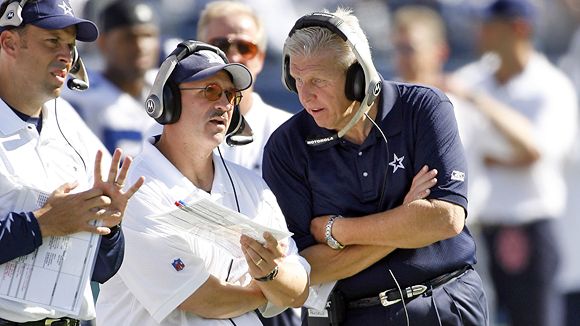
Dolphins VP of Football Ops Bill Parcells is almost 70, but don't expect him to hang it up anytime soon.

According to a story in the Palm Beach Post, Parcells is in no hurry to retire because "guys he considers both friends and contemporaries - a group that includes former college basketball coach Bob Knight, St. Louis Cardinals manager Tony LaRussa and horse trainer D. Wayne Lucas - remain active and successful in their respective sports."

"It's like they're all the same people," said CBS Sports reporter Leslie Visser, who has known Parcells since he was an assistant coach in New England in 1980. "They're all extraordinarily successful, and they all (understand) each other's success and what drives them."

These days, Parcells is less interested in the game-day strategy and more interested in building a team. "Part of his genius is the bottom five guys on the roster."

Says Visser: "I've been in his office when [Miami GM] Jeff Ireland has come in and said, 'Green Bay just waived so-and-so,' and they'll talk about it. They're always looking to upgrade that group."

Miami coach Tony Sparano, whom Parcells hired as the team's coach back in January, describes Parcells as a "personnel addict.''

One current Miami player who played for Parcells said that, as a coach, Parcells "made sure everybody was ready. He knew what guys he had to get into their heads and what guys to leave alone before a game. And during the game he was worse. You knew Bill Parcells was the coach, because he let you have it."

Says Sparano, who was on Parcells' staff in Dallas:

"One of his great strengths has always been to poke and probe players. What he likes to do is elicit a response. He can do it in a playful manner, where you almost think he's sarcastic, or he can do it in a serious way.

There are times where he and I might have a conversation on how we might want to get a message to a player. Sometimes I kind of like him to give that message: 'Well, you walk by him and do this.' Having somebody like that around, to be able to do those things with our players, is a tremendous value to us."

Thursday, November 6, 2008

Getting the right people on the bus

Re-read a memorable passage last night from Jim Collins in his classic book "Good to Great."

According to Collins, those leaders "who ignited the transformations from good to great did not first figure out where to drive the bus and then get people to take it there.

No, they first got the right people on the bus (and the wrong people off the bus) and then figured out where to drive it."


In the case of a sports franchise, getting right people on the bus isn't limited to the coaching staff or team roster. It's the entire organization -- trainers, equipment managers, media relations staff, administrators, etc. Many of these people remain with an organization for years despite being, as Collins puts it, "the wrong people."

Writes Collins:

"They said, in essence, 'Look, I don’t really know where we should take this bus. But I know this much: If we get the right people on the bus, the right people in the right seats, and the wrong people off the bus, then we’ll figure out how to take it someplace great.'

The good-to-great leaders understood three simple truths.

First, if you begin with 'who,' rather than 'what,' you can more easily adapt to a changing world. If people join the bus primarily because of where it is going, what happens if you get ten miles down the road and you need to change direction? You’ve got a problem.

But if people are on the bus because of who else is on the bus, then it’s much easier to change direction: 'Hey, I got on this bus because of who else is on it; if we need to change direction to be more successful, fine with me.'

Second, if you have the right people on the bus, the problem of how to motivate and manage people largely goes away. The right people don’t need to be tightly managed or fired up; they will be self-motivated by the inner drive to produce the best results and to be part of creating something great.

Third, if you have the wrong people, it doesn’t matter whether you discover the right direction; you still won’t have a great company. Great vision without great people is irrelevant."